Why the balance shifts in midlife, and how to invest in the body you'll live in for decades.
I teach barre at The Bar Method in Lake Oswego, and after class, I hear some version of the same question almost every week:
"Should I be doing more strength or more cardio?"
It usually comes from a woman who is already doing a lot. She walks. She takes classes. She's been active most of her life. And lately, something isn't adding up. Her body isn't responding the way it used to, and every expert she follows seems to say something different.
Lift heavy. Don't start heavy. HIIT is the answer. HIIT is the problem. Get your 10,000 steps. Walking isn't enough.
No wonder it feels confusing.
So here's my honest answer: both. But in perimenopause, the balance shifts, and strength becomes the foundation.
Let's talk about why.
"I'm doing what I've always done. Why isn't it working anymore?"
If the workouts that used to keep you feeling strong and steady don't seem to do as much anymore, you're not imagining it.
Muscle mass naturally declines with age, about 3 to 8% per decade after age 30, and that loss speeds up later in life. At the same time, the hormonal shifts of perimenopause can change how your body builds muscle, uses fuel, and recovers.
So the same routine that worked at 35 might give you different results at 45. Your body may be responding to a different set of signals than it used to.
That doesn't mean you're doing it wrong. It means your body is asking for something a little different now.
"So should I focus on strength or cardio?"
Both have a place. They just do different jobs.
Cardio supports your heart, lungs, mood, and stamina. Walking, running, cycling, swimming, dancing, and classes that get your heart rate up all count, and they still matter.
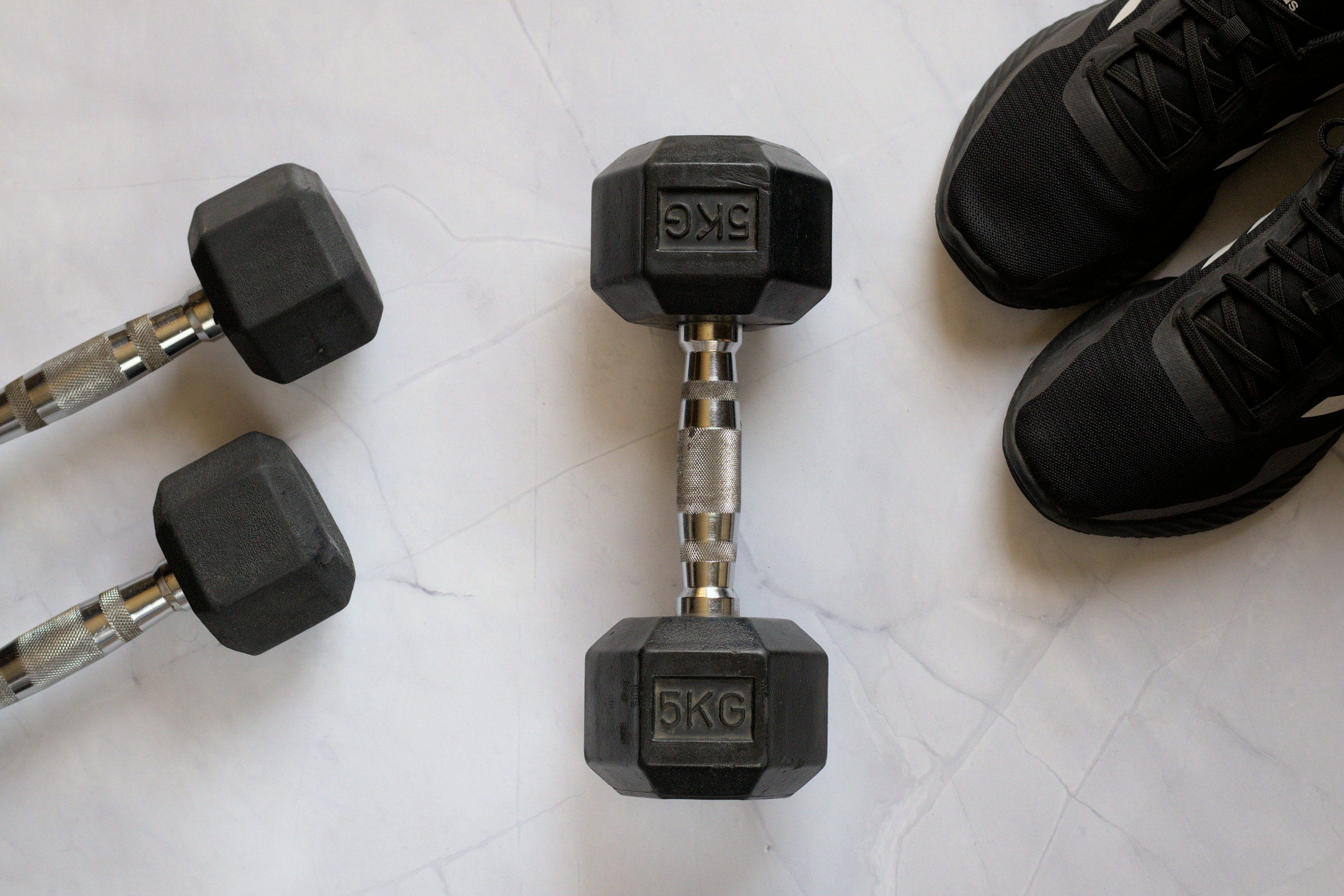
Strength training builds and protects the muscle and bone that keep you capable as you age. And strength training means resistance training. That resistance can come from your own body weight, bands, dumbbells, machines, or a barbell. (Yes, barre and Pilates count when they're challenging your muscles.)
Muscle also plays a big role in blood sugar. It's the main place your body sends glucose when insulin signals it to, so building muscle gives that glucose somewhere to go.
The CDC's guidelines for adults include at least 150 minutes of moderate activity a week, plus at least two days of muscle-strengthening activity. Many women I talk with have the first part covered. It's the second part that tends to get skipped.
And if your high-intensity workouts leave you wiped out for the rest of the day, or you're sorer and slower to recover than you used to be, pay attention to that. Your body may handle intense training differently now. That's your body giving you information.
"Why does this matter so much right now?"
My grandma grew up in a generation when no one told women to lift weights. Today, a broken wrist has meant surgery and a long, painful recovery for her. She didn't do anything wrong. She just never had this information.
We do. And we're in the window where it matters most.
Research that followed women through midlife found that bone loss speeds up during the menopause transition, starting in the later years of perimenopause. And one in two women over 50 will break a bone due to osteoporosis.
That's what investing in your future self looks like: strength and balance that keep you on your feet, and bones strong enough to handle it if an accident does happen.
What you build now is what protects you later.
You may feel fine right now. That's exactly why now is the time.
"Do I really have to lift heavy? Will I get bulky?"
Short answers: not right away, and no.
What matters most is that your muscles are challenged. The last few reps of a set should feel hard, and over time, you gradually ask a little more of your body: more weight, more reps, a slower tempo, or a harder variation.
You can start with your own body weight. Squats, lunges, glute bridges, push-ups against the kitchen counter. Then add bands or dumbbells as you get stronger.
Heavier lifting can be very effective. In one study, supervised high-intensity resistance and impact training improved bone density in postmenopausal women with low bone mass. But you don't need to start there. You just need to start.
And getting "bulky" is much harder than it sounds, especially in midlife. What most women notice instead is that they feel stronger, steadier, and more capable in everyday life.
"What about my bones?"
Bones respond to load. When your muscles pull on your bones during strength training, and when your body absorbs impact, your bones get the signal to stay strong.
Balance matters too. Strength and balance work together to keep you on your feet, and strong bones are your backup if you do fall.
A few ways to support all three:
Strength train at least twice a week, working your major muscle groups.
Practice balance in small moments, like standing on one foot while you brush your teeth.
If you're curious where your bone health stands, ask your doctor whether a DEXA scan makes sense for you.
"When am I supposed to fit this in?"
This might be the biggest question of all.
Twenty minutes counts. Two 20-minute sessions a week is a meaningful start, and far more valuable than an hour-long plan you can't stick to.
For me, strength training is a mix of classes at the studio, which give me both cardio and strength, and lifting in our garage gym with my husband as my workout partner. It's anywhere from 20 to 60 minutes, most days of the week, and it's my "me" time. But I teach barre, so my version isn't the point. Yours might be two short sessions a week before work, or a few sets of squats while dinner is in the oven.
One more thing to consider: if you're already waking up at 3am, notice how evening workouts affect your sleep. Some women find that doing more intense workouts earlier in the day and keeping evenings gentle helps. Treat it like an experiment and see what your body tells you.
Where to Start This Week
You don't have to overhaul your routine. Start here:
Add two strength sessions.
Keep your walks and your classes. Add two short sessions of resistance training this week, even 20 minutes each.
Make one move harder.
Pick one exercise you already do and make it a little more challenging. Add weight, slow it down, or add a few reps.
Put protein at every meal.
Muscle needs building blocks. Spreading protein across your meals, especially breakfast, helps support the work you're doing. If you need ideas, the Lionheart Meal Plan Subscription makes protein-forward meals easy.
Protect your recovery.
Sleep, rest days, and giving your nervous system a chance to come down are part of getting stronger.
When It Makes Sense to Get More Support
Sometimes you're doing the work and still not seeing the results you'd expect. Or you'd like to know where you're starting from before you change your routine.
More support might look like:
A DEXA scan through your doctor to understand your bone density and body composition.
Bloodwork and a personalized plan. Blood sugar, inflammation, thyroid, and nutrient levels can all affect your energy, your recovery, and how your body responds to exercise. Lionheart Longevity Labs pairs functional lab testing with a personalized plan from a licensed functional medicine provider, plus coaching to help you put it into practice. Your plan is built around you, and it may or may not include changes to how you move.
Meal support. If getting enough protein feels like a daily puzzle, the Lionheart Meal Plan Subscription takes the guesswork out of planning balanced meals.
Not sure which fits? Book a free health consult, and we'll talk it through together.
Where We Go From Here
Strength or cardio? Both. But if you've been putting strength training off, consider this your sign to start.
Not because something is wrong. Because you're in the window where what you do now shapes how you'll feel for decades.
You already know what to do. Two short sessions a week. One move made a little harder. A little more protein on your plate.
That's how the investment grows.
As always, check with your doctor before starting a new exercise routine, especially if you have an injury or a health condition.