Why the Scale Won’t Budge in Perimenopause
You’re exercising consistently.
You’re eating healthier than you did in your 30s.
You’ve cut back on sugar, increased your protein, and you’re trying to do everything “right.”
And yet…
The scale keeps creeping up.
Or it refuses to move at all.
If this sounds familiar, you’re not imagining it—and you’re definitely not alone.
Weight resistance is one of the most common frustrations women experience in perimenopause. Many of my clients tell me some version of the same story:
“I’m doing all the right things. Why is my body suddenly working against me?”
Often, the frustration isn’t just the number on the scale — it’s the feeling that your body suddenly stopped responding to the effort you’re putting in.
The truth is, your body isn’t working against you.
But it may be responding to a different set of hormonal signals than it used to.
And understanding those signals is the first step toward working with your body again.
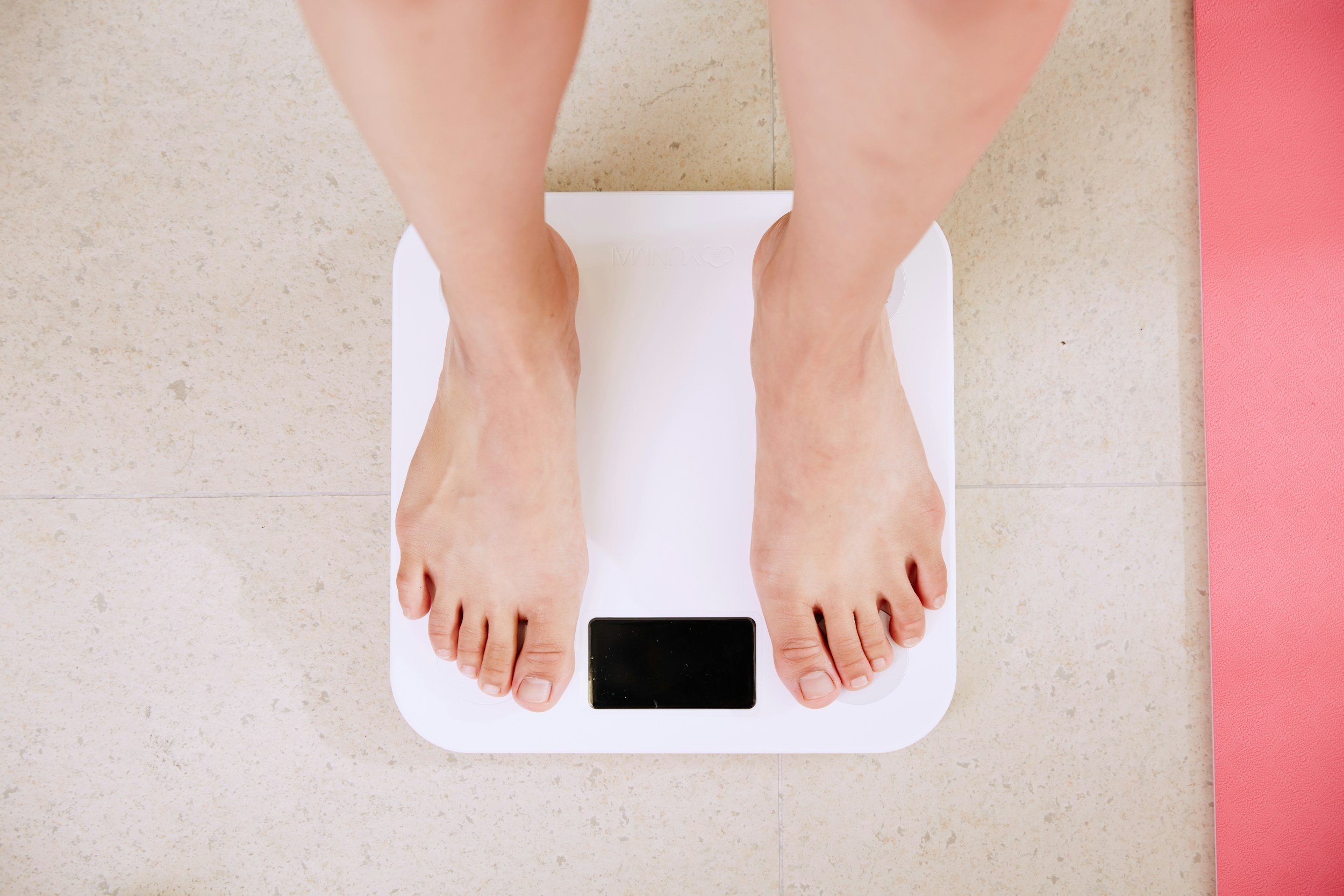
“Why Am I Gaining Weight When I Haven’t Changed Anything?”
One of the most confusing parts of perimenopause is that weight changes often happen without any obvious changes in habits.
You may be eating the same way.
Exercising the same amount.
Following routines that worked for decades.
But beneath the surface, your hormonal environment is shifting.
Estrogen, progesterone, cortisol, and insulin all interact to influence how your body:
Stores fat
Uses energy
Builds or loses muscle
Regulates appetite and cravings
When those signals change, the strategies that used to work may stop producing the same results.
This doesn’t mean your body is broken.
It means it may need a different kind of support.
The Role of Insulin Sensitivity
One of the most important (and often overlooked) factors in perimenopause weight resistance is insulin sensitivity.
Estrogen plays a role in how efficiently your body uses insulin. As estrogen fluctuates during perimenopause, insulin sensitivity can decline.
When this happens, the body becomes more likely to:
Store excess glucose as fat
Experience stronger cravings
Feel energy crashes after meals
This is why stabilizing blood sugar becomes such a powerful lever during this stage of life.
Balanced meals that include protein, fiber, and healthy fats help support steadier glucose levels and reduce the hormonal signals that promote fat storage.
The Cortisol Connection
Stress hormones also play a significant role in weight resistance.
During perimenopause, many women become more sensitive to stress because progesterone (the hormone that has a calming effect on the nervous system) begins to decline.
As a result, cortisol can become more disruptive.
Chronically elevated cortisol can:
Promote fat storage around the midsection
Increase appetite
Disrupt sleep
Make weight loss feel nearly impossible
This is why strategies that support nervous system regulation—like walking, breathwork, and consistent sleep—are just as important as nutrition and exercise.
Hormone health isn’t just about what you eat.
It’s about how your entire system is responding to stress.
Muscle Matters More Than Ever
Another major shift during perimenopause is gradual muscle loss, a process known as sarcopenia.
Starting in our 40s, women can lose muscle mass each year if they aren’t actively building or maintaining it.
Why does this matter for weight?
Muscle is metabolically active tissue. It helps regulate blood sugar, supports metabolic rate, and improves insulin sensitivity.
When muscle declines:
Metabolism can slow
Blood sugar regulation becomes harder
Weight loss becomes more difficult
Strength training becomes one of the most effective tools for maintaining metabolic health during this stage of life.
Not because it “burns more calories,” but because it supports the hormonal systems that regulate metabolism.
When “Healthy Habits” Backfire
Another surprising contributor to weight resistance is doing too much of the wrong kind of healthy habits.
Many women unintentionally stress their bodies by:
Undereating
Skipping meals
Overdoing high-intensity workouts
Prioritizing cardio over strength training
While these strategies may have worked in earlier decades, they can sometimes increase cortisol and slow metabolism during perimenopause.
In other words, the body may interpret these habits as stress instead of support.
Where to Start If Your Weight Feels Stuck
If you’re recognizing yourself in this conversation, the goal isn’t to overhaul everything overnight.
Instead, think of this as a few small experiments that help your body feel more supported metabolically and hormonally.
Here are a few places many women start seeing progress.
Prioritize Protein Earlier in the Day
Many women unknowingly under-fuel in the morning.
Starting the day with 25–30 grams of protein can help stabilize blood sugar, reduce cravings later in the day, and support muscle maintenance.
Examples include:
Eggs with vegetables and avocado
Greek yogurt with nuts and berries
A protein smoothie
Small improvements in blood sugar stability can lead to noticeable changes in energy and appetite.
Strength Train Two to Three Times Per Week
You don’t need to live in the gym.
But building and preserving muscle is one of the most powerful ways to support metabolism and insulin sensitivity during perimenopause.
Two to three strength sessions per week can make a meaningful difference over time.
Think of strength training less as burning calories and more as building the metabolic engine that supports hormone health.
Pay Attention to Stress and Sleep
If your body feels stuck despite doing “everything right,” cortisol may be part of the story.
Small daily practices can help regulate the nervous system and support healthier hormone patterns:
Morning sunlight soon after waking
Walking after meals
Consistent sleep and wake times
Reducing late-night screen exposure
These habits may seem simple, but they help lower the background stress signals that influence metabolism.
Notice Patterns Instead of Judging Yourself
Instead of assuming something is wrong with you, try observing patterns for a few weeks.
Pay attention to:
Energy levels
Hunger and cravings
Sleep quality
Stress levels
Exercise recovery
These clues often reveal whether blood sugar, cortisol, sleep, or inflammation may be influencing how your body responds.
When It Makes Sense to Get More Support
If your weight feels truly resistant despite consistent healthy habits, it may be time to look a little deeper.
Sometimes underlying factors like insulin resistance, cortisol dysregulation, inflammation, or hormonal shifts are quietly influencing metabolism.
This is where personalized guidance — and sometimes targeted lab testing — can provide valuable insight.
Inside my work with clients, including the Lionheart Inner Circle, we often combine symptom patterns, lifestyle factors, and hormone testing to help women understand why their bodies are responding the way they are and what strategies are most likely to move the needle.
Because the goal isn’t just weight loss.
It’s building a body that feels energized, resilient, and supported for the decades ahead.